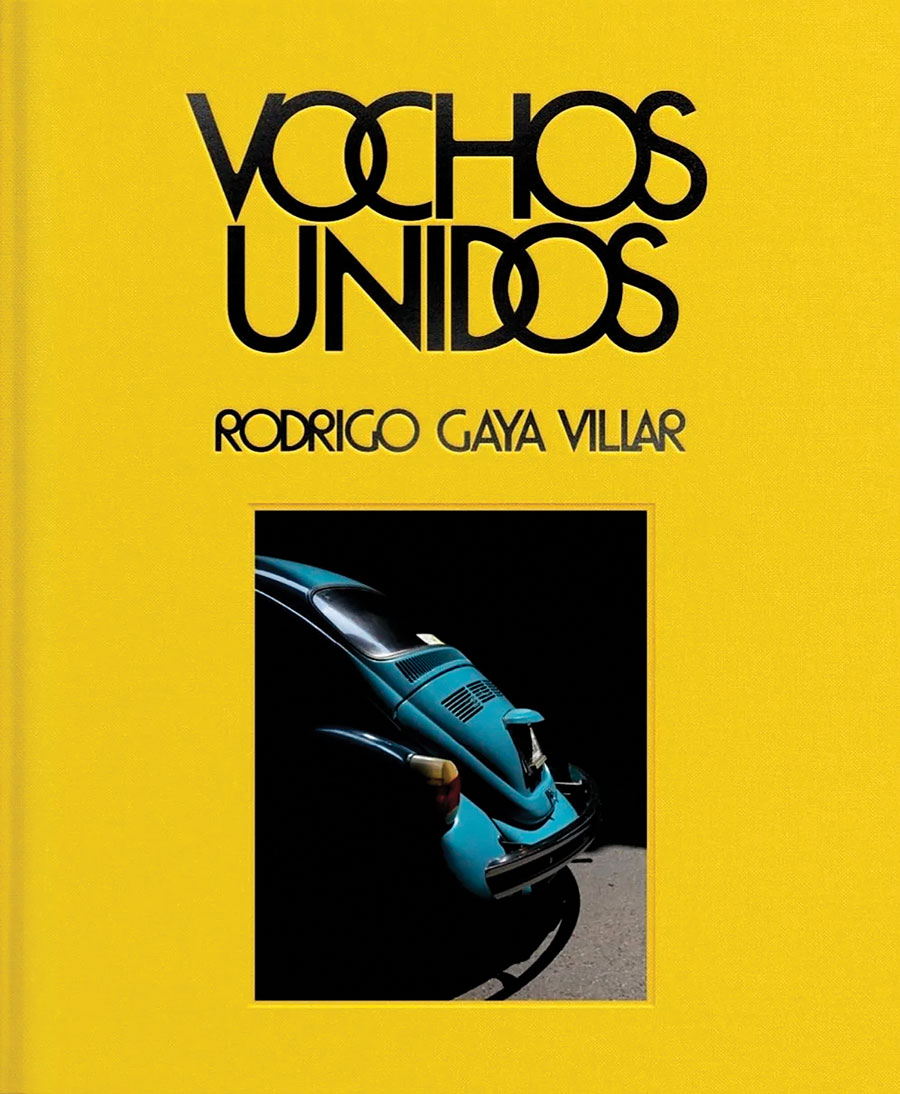
By Rodrigo Gaya Villar, 308 pages, Carrara Media, April 2026, $54.99 Vochos Unidos is less a conventional automotive history than author Rodrigo Gaya Villar’s photographic journey through Mexico, using the Volkswagen Beetle as its emotional and visual centerpiece. Across more than 300 pages, he documents the streets, beaches, neighborhoods and mountain towns connected by the humble “Vocho,” the affectionate Mexican nickname for the Beetle. The result feels warm, human and deeply personal. This is very much a “look book,” though that should not suggest superficiality. Villar’s photography captures small, everyday moments where the Beetle becomes less a machine and more a […]
By Rodrigo Gaya Villar, 308 pages, Carrara Media, April 2026, $54.99
Vochos Unidos is less a conventional automotive history than author Rodrigo Gaya Villar’s photographic journey through Mexico, using the Volkswagen Beetle as its emotional and visual centerpiece. Across more than 300 pages, he documents the streets, beaches, neighborhoods and mountain towns connected by the humble “Vocho,” the affectionate Mexican nickname for the Beetle.
The result feels warm, human and deeply personal.
This is very much a “look book,” though that should not suggest superficiality. Villar’s photography captures small, everyday moments where the Beetle becomes less a machine and more a trusted companion woven into the fabric of daily life. Some images are playful, others quietly melancholy, but nearly all share an unmistakable affection for the subject.
What emerges most strongly is the indomitable spirit of the Beetle itself. Few automobiles became so intertwined with the identity of an entire country. Built in Mexico for decades and valued for its simplicity, durability and affordability, the Beetle transported generations long after it disappeared from the roads elsewhere.
The sequencing is particularly effective, allowing the viewer to move fluidly between regions and moods without ever losing narrative cohesion. The book invites browsing but also rewards close attention. Beautifully produced and thoughtfully designed, Vochos Unidos succeeds not by explaining the Beetle, but by showing, quietly and convincingly, why people still love it.
Dragster Genesis: The Formative Years of Fearsome Acceleration
By Barry John, 192 pages, Evro Publishing, March 2026, $69
Drag racing may be the simplest form of motorsport, but it is among the most difficult to translate effectively to the page. In Dragster Genesis, Barry John approaches the subject through its earliest decades, focusing on the machines and personalities that transformed a grassroots pastime into a highly specialized form of competition.
The story opens in post-war Southern California, where hot-rodders experimented in garages and on dry lakes, before charting the rapid evolution toward purpose-built dragsters capable of extraordinary performance.Familiar figures, including Don Garlits and Shirley Muldowney, are joined by a broader cast of engineers, builders and drivers whose contributions are less widely known but no less significant in shaping the sport’s direction.
As expected from publisher Evro, the production values are strong. The text is clear and economical, allowing the visual material to take center stage.
Period photography is well chosen, while a series of extremely charming profile illustrations documents the technical progression of early dragsters.
At just under 200 pages, this is not an exhaustive or deeply technical history, but rather an accessible and visually driven survey that prioritizes atmosphere and development over granular detail.