

Dad’s passing was tough — and parting ways with his collection is no easier Never parting with anything means everything becomes someone else’s cross to bear There was a lifetime of hardware in Dad’s shop. Steel, aluminum and fiberglass, almost all of European descent, almost none of it expensive. And when he passed last summer, for all practical purposes, it became mine. Mom has Alzheimer’s, and she hadn’t even been in the shop for years, so it was my cross to bear. In total, counting the daily drivers, there were 11 cars. There was also an old fiberglass boat, two vintage […]
Dad’s passing was tough — and parting ways with his collection is no easier
Never parting with anything means everything becomes someone else’s cross to bear
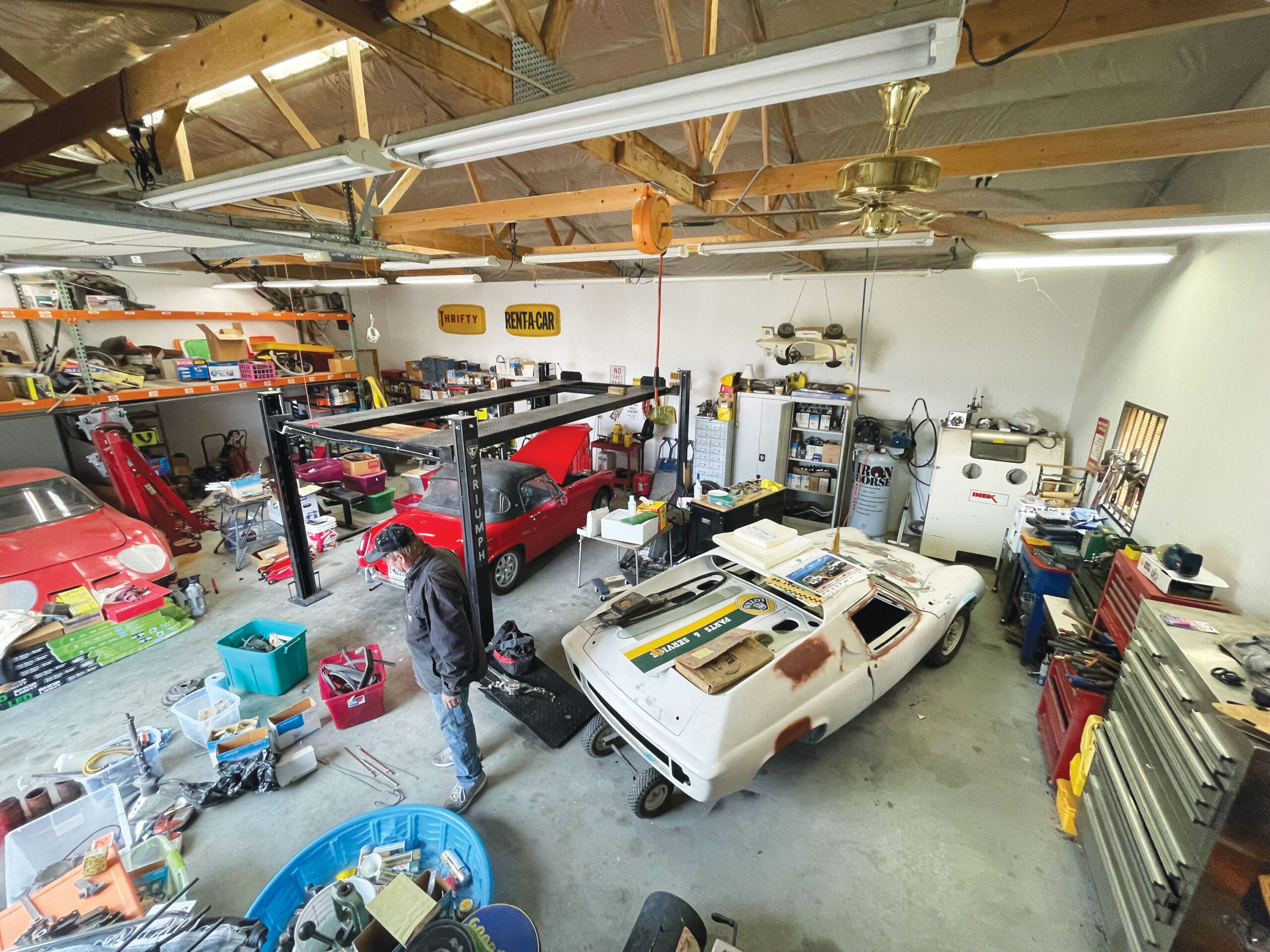
There was a lifetime of hardware in Dad’s shop. Steel, aluminum and fiberglass, almost all of European descent, almost none of it expensive. And when he passed last summer, for all practical purposes, it became mine. Mom has Alzheimer’s, and she hadn’t even been in the shop for years, so it was my cross to bear.
In total, counting the daily drivers, there were 11 cars. There was also an old fiberglass boat, two vintage Honda trail bikes and a fantastic, restored 1974 Rickman Montesa motocross bike. All of it is the result of Dad’s stubborn proclivity to never part with anything. Mixed in among the cars was the flotsam of a broad-minded collector: vintage signs, bicycles, ammunition, a tennis-ball launcher (we never had a tennis court), thousands of parts and tools, and a used slot machine that I will always like less than Dad did. I loved the man deeply and was simultaneously confused by him. If Mike and Frank were still American Picking, the place certainly justified one of those excited calls from Danielle.
Never say never
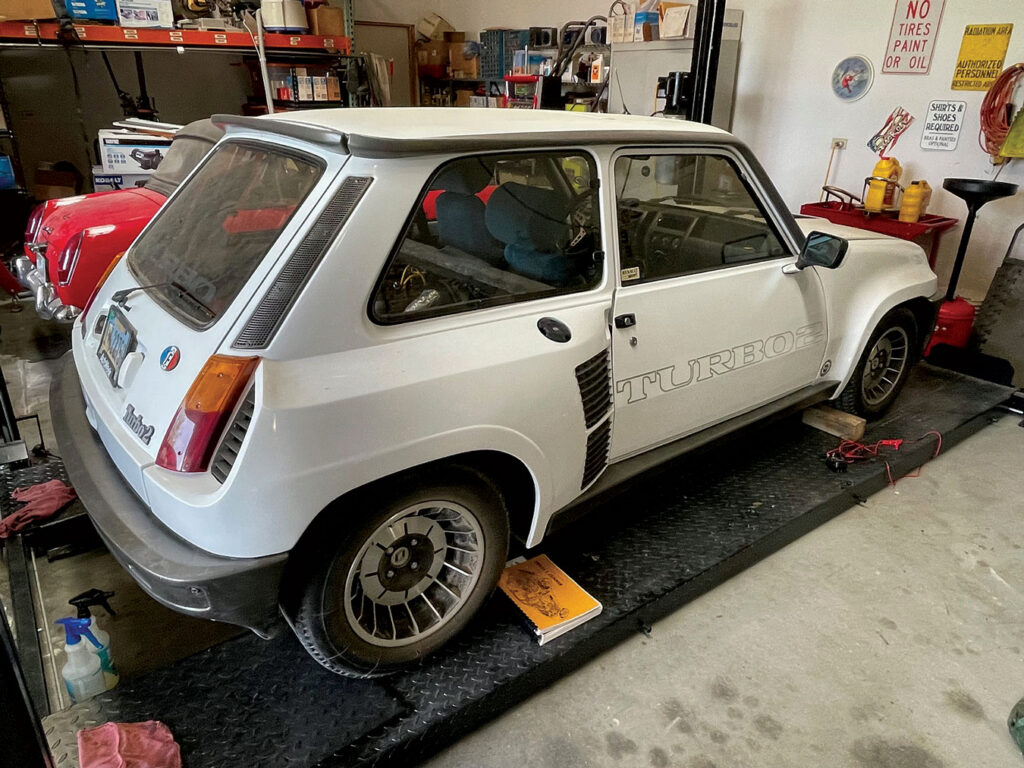
The crown jewel was a 1982 Renault R5 Turbo 2, a car my dad loved since seeing the 1983 Bond film “Never Say Never Again.” I’d found it for sale in 1999 in California. After my test drive, he promptly bought it and had it shipped back home to Wyoming. It’s the one car I’ll be keeping, even though I don’t have space.
There were so many others. The most practical and fun was a Marina Green Mica 1997 Mazda Miata M Edition in excellent condition. Dad bought it for Mom on a whim in 2012. It was hers, and she protected it fiercely.
There were three Opel GTs; one was my first car, which I drove to high school in the 1990s. There was also a competition car that dad raced at hillclimbs. It was once powered by a Buick V6 that shot fire from its open exhaust straight into my formative memories. The third was returning to nature in the weeds between the sheds, finding ways to rust despite the arid climate of Wyoming.
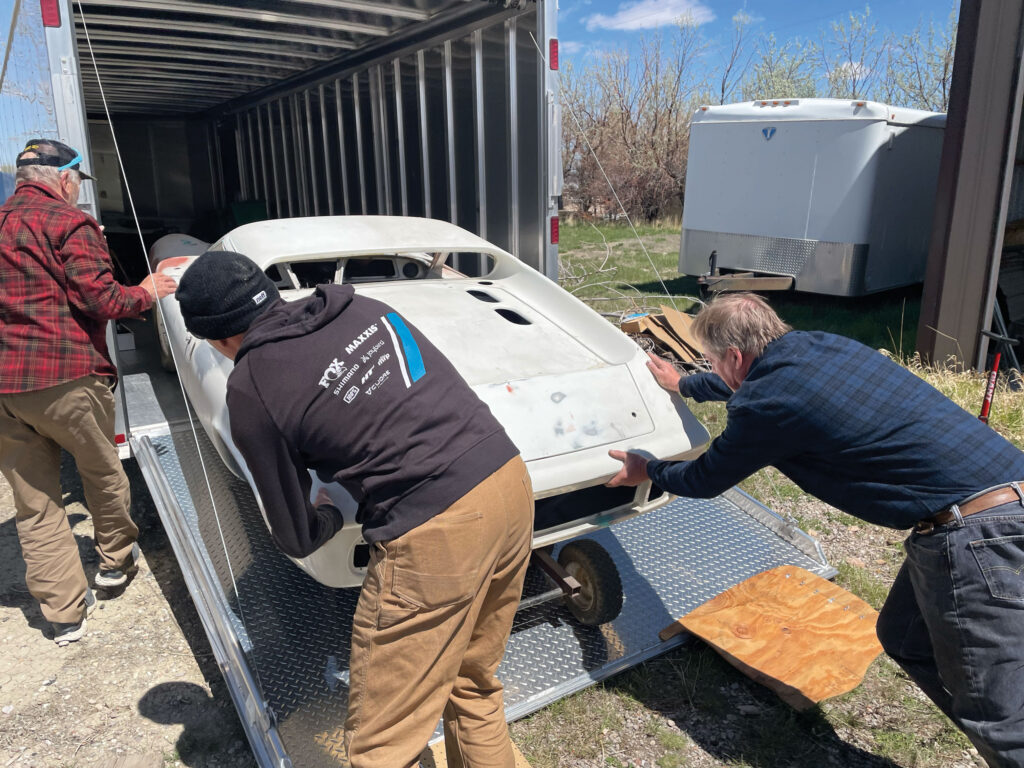
Perhaps my most vivid memories lie with the 1967 Lotus Europa dad bought from a local doctor. He made it run, painted it, and drove me to junior high in it. Later, I drove it to my high-school prom, autocrossed it, and took it for joyrides when my parents were out of town. Dad pulled it apart sometime in the late ’90s for a second rebuild, but it never made it back together.
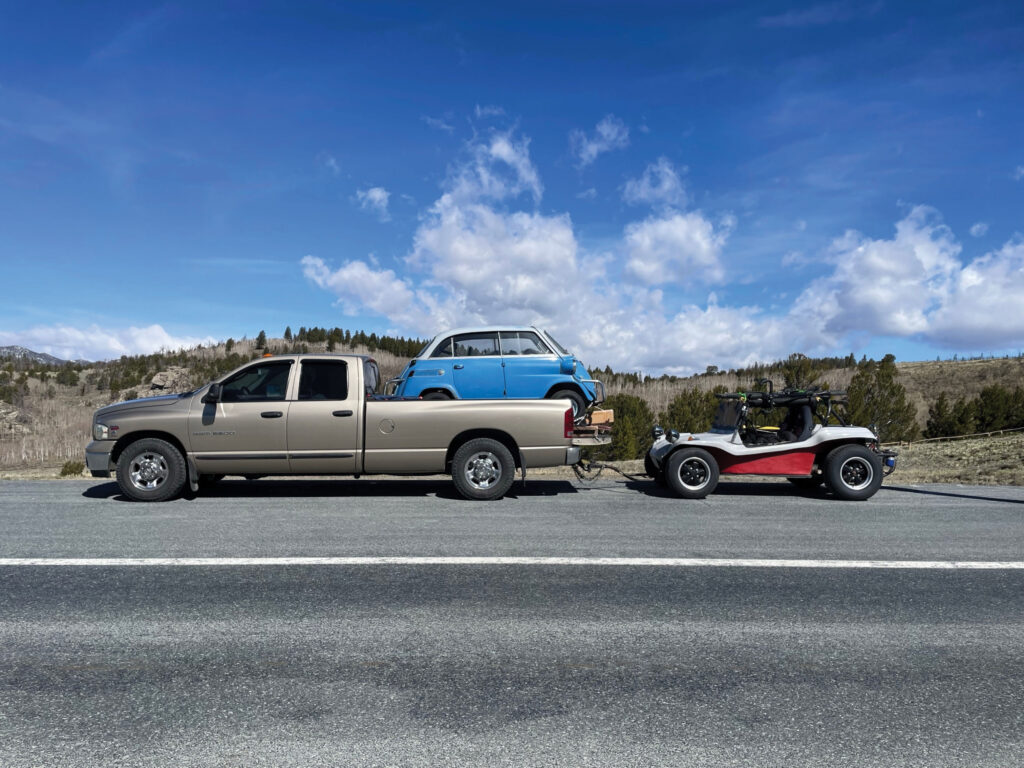
But he kept buying. His taste for the weird ones was insatiable. So, when he found a 1959 BMW Isetta 600 in a barn in Montana, the fact that it was filled with chicken shit and pornography didn’t faze him. He proudly brought it home and shoveled the mess into the garbage bin. Then he got it running and refurbished the interior, including sewing the upholstery himself. The thing never failed to bring smiles to faces everywhere it went, emblazoned with two bumper stickers: “My other car is a Lotus,” and “0–60 eventually.” The latter was as cliché as it was optimistic.
There was also a 1966 Austin-Healey Sprite that I discovered for sale late in my teens. Dad bought it, repainted it red, swapped in a Datsun 5-speed and installed replica Panasport Minilite wheels. It was a lovely car. Not a white-glove beauty, but an attractive and complete example, with a hard top.
Then there were the cars that arrived in the last 10 years: a 1968 Mk II Mini Cooper and a 1969 VW dune buggy. I had driven each of these, and neither ever really worked right. Their arrival later in Dad’s life was part of the problem, I’m certain. In fact, among the entire collection of interesting cars, the only one that was truly drivable when he died was the Miata.
The sell-off
My mission began with the path of least resistance. Everybody loves a Miata, and a quick look through the Bring a Trailer auction history showed two things. First, M Editions are worth a lot more than they were when my dad bought this one, and second, I recognized a bidder who had missed a few recent sales. I hadn’t talked to him in 20 years, but I rang him up and told him I had his car. He agreed. In the fall I drove the Miata 700 miles home to Boise, ID. He flew in from San Francisco, handed me a check, dropped the top, and headed back to California.
That was the easy one. Nobody buys weird, old European cars in the windy mile-high hell that is a central Wyoming winter, so I spent the next few months writing “For sale” ads and talking to friends. One good buddy fell for the Isetta, which he figured would perfectly accompany his Citroën 2CV. And he wanted the dune buggy as a project he and his dad could resurrect to relive old times getting stuck in the central Oregon desert. I was happy to enable them.
In the spring, they pulled into my driveway in a Ram 3500. We drove to Wyoming to meet potential buyers for the Lotus and Sprite. I was at the courthouse dealing with titles when the Lotus buyer from Colorado arrived on a snowy Tuesday morning. Before he had even seen the car, he recognized that he actually knew my dad. Some 30 years earlier, he’d been racing his BMW 700 at a vintage event when Dad showed up in the Isetta. They hit it off, and Dad took him, his wife, and daughter for ice cream in the little blue car that delivered smiles. Now he was to leave with Dad’s Europa and a trailer full of parts.
The next day, the Sprite buyer showed up. We had agreed on a price for the car in running condition, which, thanks to the sticky SU carburetors and a lack of time, I wasn’t able to achieve. The price came down, which Dad wouldn’t have liked, but he would have approved of the car going to a home where its SUs were made right and the new owner of the Sprite texts me updates about his love for the car.
The biggest problem with Dad’s cars is that they’re so far away. Every piece of every transaction is complicated by distance. Need to know if there’s rust on the firewall? Curious about a stamping on the block? What offset are those wheels? One can only call in so many favors from friends back home. And I can’t list cars on auction sites when even the most basic questions can’t be easily answered. Arranging pickup is an obstacle. As a result, I still have trips home scheduled to part with the hardware that remains.
Parting memories
There were beautiful moments. Before selling her Miata, I took my mom for a drive. We wound our way up the mountain, where it felt at home. She didn’t know it, but it was to be her last ride in a car that reminded her of Dad’s incredible spontaneity and unyielding advocacy for her. She doesn’t remember those glorious final minutes with the car, but I will, forever.
This entire endeavor, of course, is fraught with emotion. It’s sad. Every sale conjures memories of Dad. His resourcefulness and personality are forever embedded in each of these cars. And I lose a little more of him as each one departs. But there’s no denying that life would be easier had he dealt with them on his time. I’m far away, have kids at home myself, and I could spend more time with Mom if I weren’t selling cars. Though nothing will ever be funnier than loading the Isetta into the bed of a pickup truck that’s also flat-towing a dune buggy 1,000 miles to its new home.
It does feel good to keep a few cars close. I will see the Isetta and dune buggy again, and that will salve the pain some. Knowing that Mom’s Miata is loved and that the Sprite’s purity is cherished by its new owner gives me joy. There’s solace in knowing that these cars will bring others delight.
Before the buyer left with the Lotus, we sorted through every shed, box and bin, ensuring that all the Europa parts were collected. Then, I pushed the car into a trailer for the last time. Relieved of its powertrain, its back half was supported by a dolly Dad had fabricated. It was a perfect metaphor for this situation. Things aren’t quite right, and the job is far from finished. But there’s hope on the horizon.
I miss you, Dad.