
Stuttgart and Abingdon, happy together I have a pairing I’d like to run by you. The first choice is a 2005 Porsche 911 C4S. As you’ll recall, I bought this car last December. The second pick is a 1964 Austin-Healey 3000 BJ8 Mk III, which I more recently acquired. Each car cost me just over $30,000, and each one represents a now-affordable high point of their era. Defining eras If I look back at the cars I have enjoyed in my lifetime, they are easily divided into two categories. The first is post-World War II to 1973, and the second is […]
Stuttgart and Abingdon, happy together
I have a pairing I’d like to run by you.
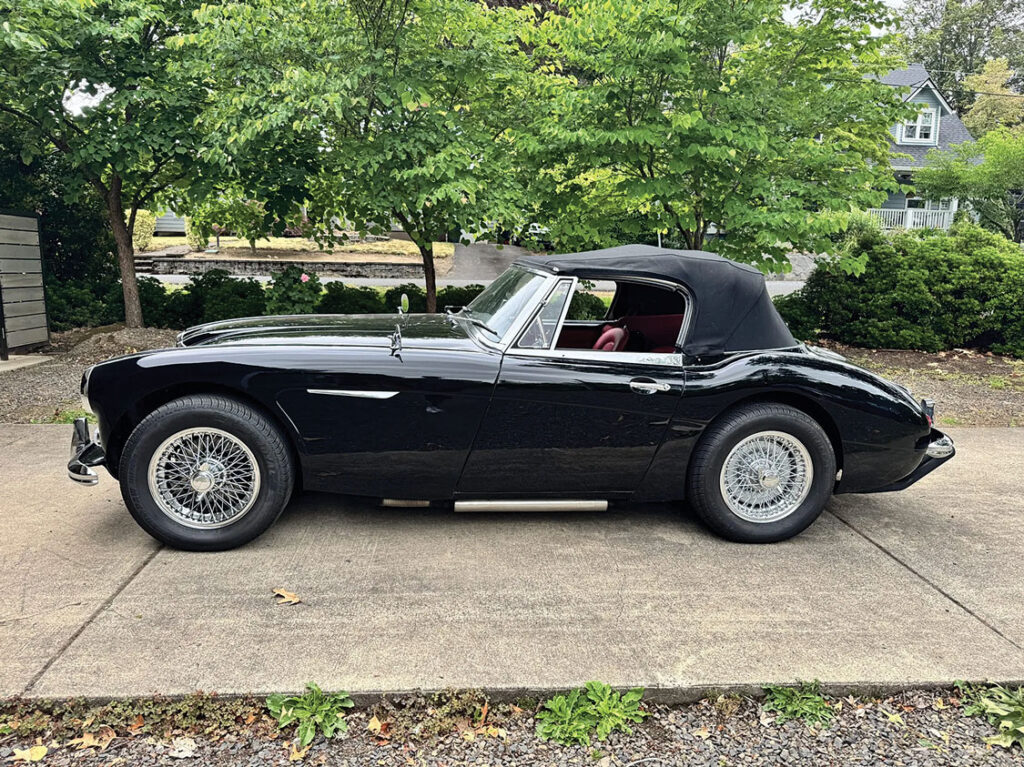
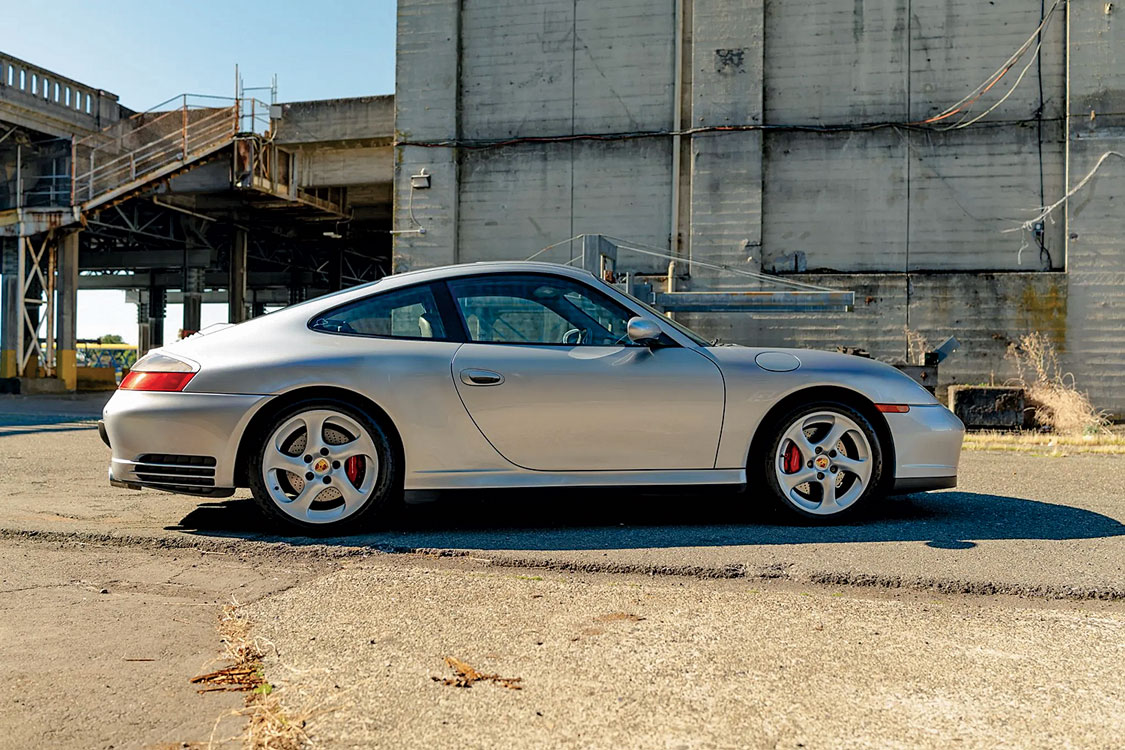
The first choice is a 2005 Porsche 911 C4S. As you’ll recall, I bought this car last December. The second pick is a 1964 Austin-Healey 3000 BJ8 Mk III, which I more recently acquired. Each car cost me just over $30,000, and each one represents a now-affordable high point of their era.
Defining eras
If I look back at the cars I have enjoyed in my lifetime, they are easily divided into two categories. The first is post-World War II to 1973, and the second is 1974 to the present.
Cars started to become more functional and useful in the immediate post-war period of the 1950s. The next decades saw developments such as more-formidable engines, sophisticated suspensions and disc brakes.
The Healey represents the best of the analog sports cars from this era. It has a powerful 6-cylinder engine and an overdrive that lets it cruise comfortably at 70 mph.
The whole Healey thing started when English-car guru and SCM Contributor Reid Trummel mentioned that Austin-Healey was celebrating its big 75th anniversary in 2027. When my son Bradley said that if I bought a Big Healey, he would accompany me on a weeklong trip to the convention in Lake Tahoe, CA, the hunt was on.
It’s a good time to be a Healey buyer. The prices of concours-restored 3000s have dropped nearly by half, from the $150,000 that they were regularly bringing at Barrett-Jackson a decade ago to $75,000 or less in online auctions today.
Most attribute this decline to the “aging out” of those attracted to the performance — and not dissuaded by the shortcomings — of a Healey. Those would be Baby Boomers, a pool that is shrinking daily.
I didn’t want a concours car, just a “handsome driver.” I set my budget at $30,000.
Buy local
“You willed this sale to happen,” was Editor-in-Chief Jeff Sabatini’s reaction when we told him we had found a car located just five miles away.
It was an attractive specimen, in black over fresh red leather, with new chrome wires.
Reid looked it over and pointed out some flaws. However, when you were sitting behind the refinished wood dash, smelling the leather and listening to the twin pipes, the pure euphoria of the classic Healey experience outweighed any shortcomings.
I wired the funds, and the seller delivered the car to my condo the next day.
Fast-forward
The second era began in 1974. Recently enacted U.S. smog and safety regulations were in full force, eventually leading to technologies that we all take for granted today, such as computer-controlled engines and airbags.
My 2005 Porsche in many ways represents the affordable high point of this era, much nearer to the final iteration of a pure, internal-combustion 911 than it is to the original air-cooled model. While our car has lost much of the light and delicate nature of a classic 911, it is still a Porsche, which we might not be willing to say about the electrified future.
Make no mistake, electric Porsches will offer an entirely different set of driver experiences. I recently watched a video on YouTube where eight electric cars were tested to see which one had the best range. Sabatini commented, “They’re not talking about handling, or braking or driver experience. Just which one can go the farthest before it coasts silently to a stop.”
Range is how they compete. And what memorable driving sensations come with that? None.
“Just cars”
The four decades between our Healey and 911 encompass the creation and production of most of the memorable sports cars we grew up wanting. Our desires were whetted by comprehensive road tests in Road & Track and Car and Driver that captured the essence of the motoring experience.
I have lived every one of those years, driving and evaluating a great number of the best sports cars of that period. My experience and tastes have been molded one memorable drive after another.
My son, however, simply gets out of the 1964 Healey (it has no seat belts to unfasten) and skips forward to 2005, when he climbs in the Porsche. That transition is his personal time machine.
The 911 has features that were unimaginable in 1964. Its performance, handling and safety attain very high standards.
Yet for Bradley, they are both “just cars.” Different from each other, but with steering wheels and gas and brake pedals to make them start, stop and go around turns.
If I look forward another four decades (to 2066!), I’m not at all sure of what I could envision. Self-driving cars with no steering wheels or pedals? Will robo-cars have an “analog mode” where they make artificial noise, and look for the best line through turns, maybe adding a little body lean?
Today, the two cars sit, side by side, Abingdon and Stuttgart, 1964 and 2005.
I enjoy standing and looking at both of them. They both have definitive, attractive styling. Neither will ever be mistaken for any other model. They each speak their own dialect of the sports-car language. At 19, my son can experience this whole evolution, just by switching from one car to the other. What a journey.
We are fortunate indeed to live in a time when we have so much to choose from, and nothing to keep us from the open road ahead.