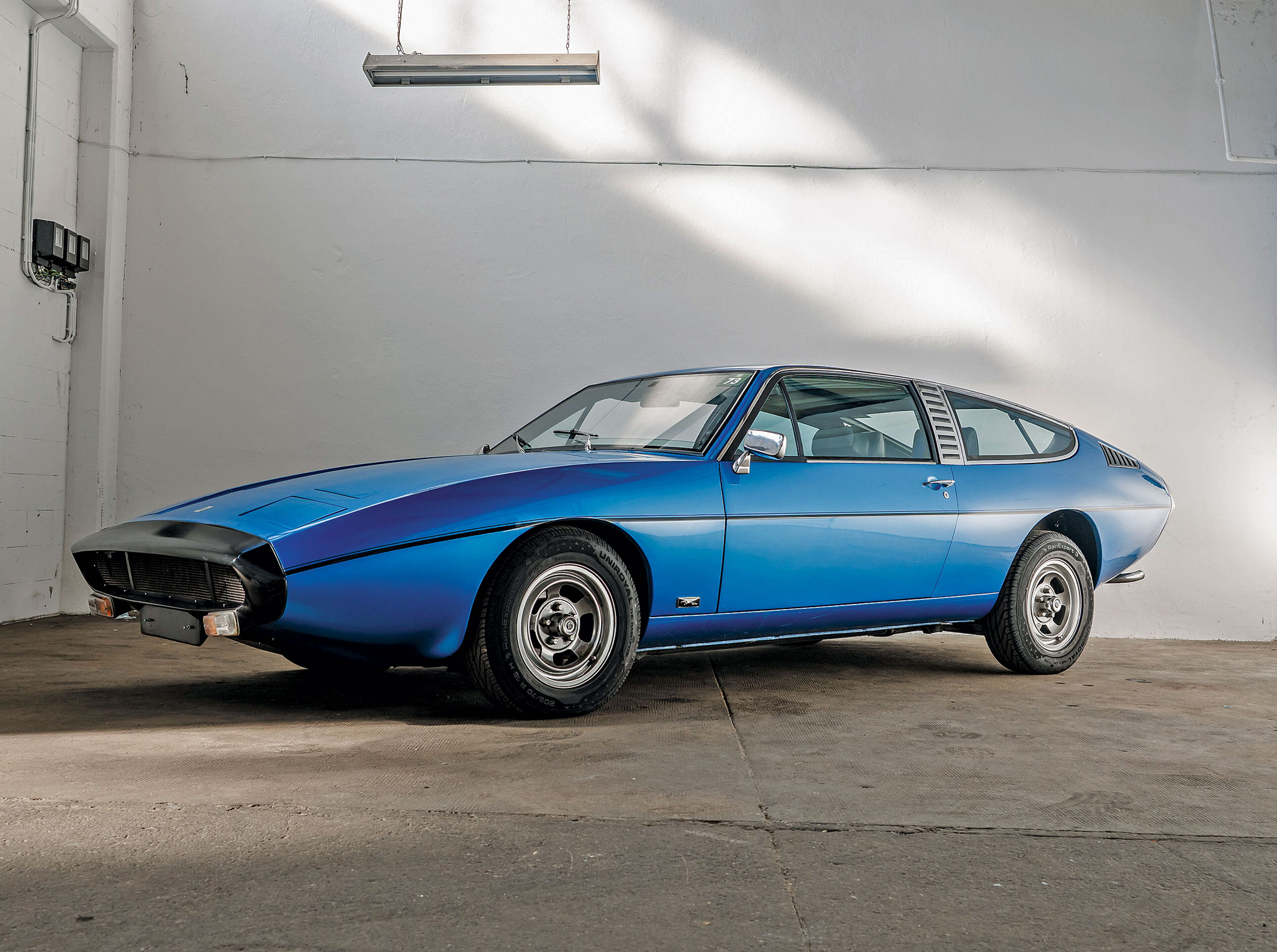
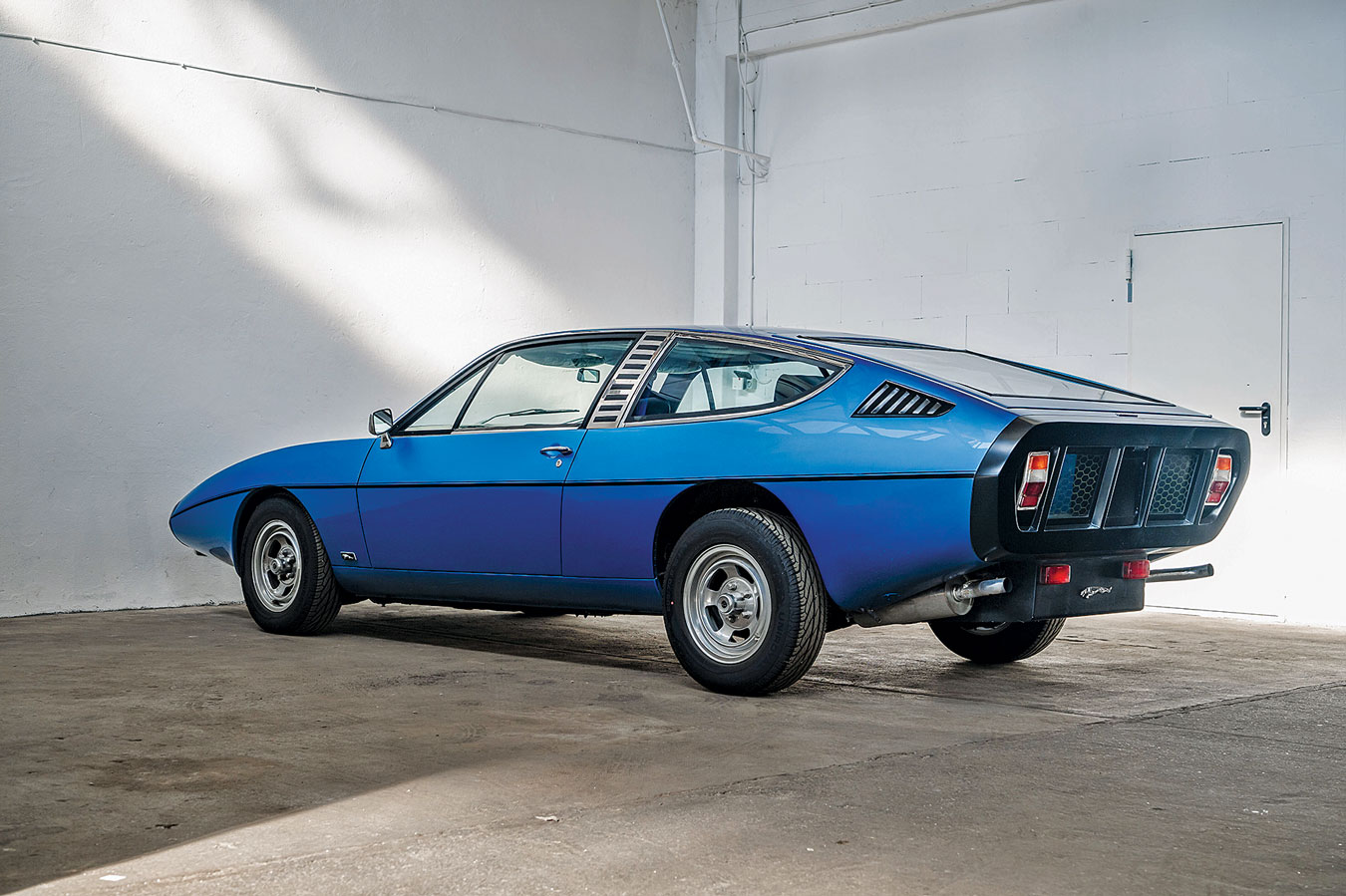
This car, Lot 252, sold for $24,553 (£18,400), including buyer’s premium, at Bonhams’ Chichester, U.K., sale, on September 19, 2026.
In the before times, before well-intentioned regulators conspired to protect us from our reckless automotive-obsessed selves, it was possible for almost anyone with a modest amount of capital to become an automaker of some sort, car dealers included. That proximity to the purse strings took many forms in the post-war era. In the U.S., Chevrolet dealers such as Yenko and Nickey installed bigger big blocks than General Motors dared to offer. British dealers, however, had grander ambitions, partially enabled by a pool of coachbuilding talent increasingly at loose ends as the bespoke car business was overtaken by mass production and monocoque chassis construction after the war.
One such dealer was H.R. Owen, founded by intrepid Great War flier Harold Rolfe Owen, who ultimately leveraged the social benefits of his polo-playing skills into a Rolls-Royce and Bentley concession in wealthy, cosmopolitan Mayfair in 1932. The business was acquired in 1970 by Heron, the property and motor group run by Gerald Ronson. And it is there that we meet the linchpin of the Owen Sedanca story, Christopher Humberstone.
Espada envy
Young Humberstone joined Standard-Triumph as a trainee before landing at H.R. Owen at age 23, where he was tasked with resolving development challenges on Owen’s outsourced Rover P6-based “Estoura” station-wagon variant. At the time, Ronson was probably more focused on his burgeoning property business than on expanding sales that now included Jaguar, but that didn’t stop him from conceiving of a car that proudly bore the “Owen” marque.
Its genesis was a crude sketch from Humberstone that envisaged a mid-engined, V8-powered 4-seater he labeled the “Saluki.” A concept that complex was unlikely to reach production, but Ronson, owner of both a Lamborghini Espada and an Iso Grifo, channeled Humberstone’s exuberance into the development of a somewhat more practical sports coupe that Owen could call its own. “My brief was for a car with lots of room for four people and more headroom than a Jaguar XJ6,” Humberstone told Classic & Sports Car in 1990. “It also had to be simple, based on a car that would need no mechanical modifications.”
The transformation was entrusted to Williams & Pritchard, a small north London coachbuilder renowned for its prototype development abilities. Humberstone’s proposal echoed several Gandini-penned Bertone designs, including the Urraco as well as Ronson’s Espada and the E-Type-based Pirana that heavily influenced it.
Contemporary photographs show wooden forms placed over the shell of the XJ6 donor, whose upper structure was cut away and replaced with Humberstone’s wedge elements using hand-formed aluminum panels. The interior was based around traditional Jaguar switchgear, but complemented with Bridge of Weir leather and Dralon synthetic velour, a defining feature of 1970s British furnishings. Wide doors enabled easy access to the rear seats.
Timing is everything
Owen called its creation the “Sedanca,” recalling the elegant pre-war Gurney Nutting drophead coupes. The September 1973 launch was encouraging, with 80 firm orders despite an £8,500 price tag, more than double the cost of the XJ6 on which it was based. But the Sedanca was soon stalled by the coincident announcement of Jaguar’s own XJ coupe and the global energy crisis that erupted weeks later. “It was mayhem,” recalled Humberstone. “Within 48 hours the whole executive-car market had collapsed and anything over 1,600 cc was unsaleable. London became a city devoid of large cars, and projects like ours were the first to get the chop.”
Despite an inauspicious birth, the Sedanca did garner attention, and a handful of further examples were ordered, though sources disagree on exactly how many were ultimately constructed. The likely answer is a total of four cars built, starting with the 1973 prototype and extending as far as this 1982 example, commissioned years later by the family that owned an earlier car and built by Panther Westwinds.
Buyer beware
Unique as it may be, our subject car will likely present challenges for its new owner. Beyond calling it “a highly significant survivor,” Bonhams’ description doesn’t detail any of the car’s age-related issues, such as its worn interior and exterior corrosion, nor does it say when the car was last run or serviced. Yet with a final price of less than $25,000, barely half of the low pre-sale estimate, there’s lots of room for restoration expenses (though finding that original blue velour might prove problematic). An interesting comparison would be the one-off 1967 Meccanica Maniero 4700 GT, which sold for $193,000 at Broad Arrow’s Villa d’Este sale earlier this year. It, too, appeared rough around the edges, but its Michelotti pedigree carried greater cachet, while its small-block Ford V8 likely provided more fun.
For a patient collector looking for an intriguing, wedge-styled rarity whose uncertain condition is balanced by off-the-shelf mechanicals, this Sedanca could be a well-bought project. Restored to its original state, it would be welcomed on almost any concours field, confounding even the most knowledgeable anoraks. If you missed out here, another chance is coming: an earlier, better-finished example upgraded with V12 power is consigned to Bonhams’ Paris sale in February 2027.