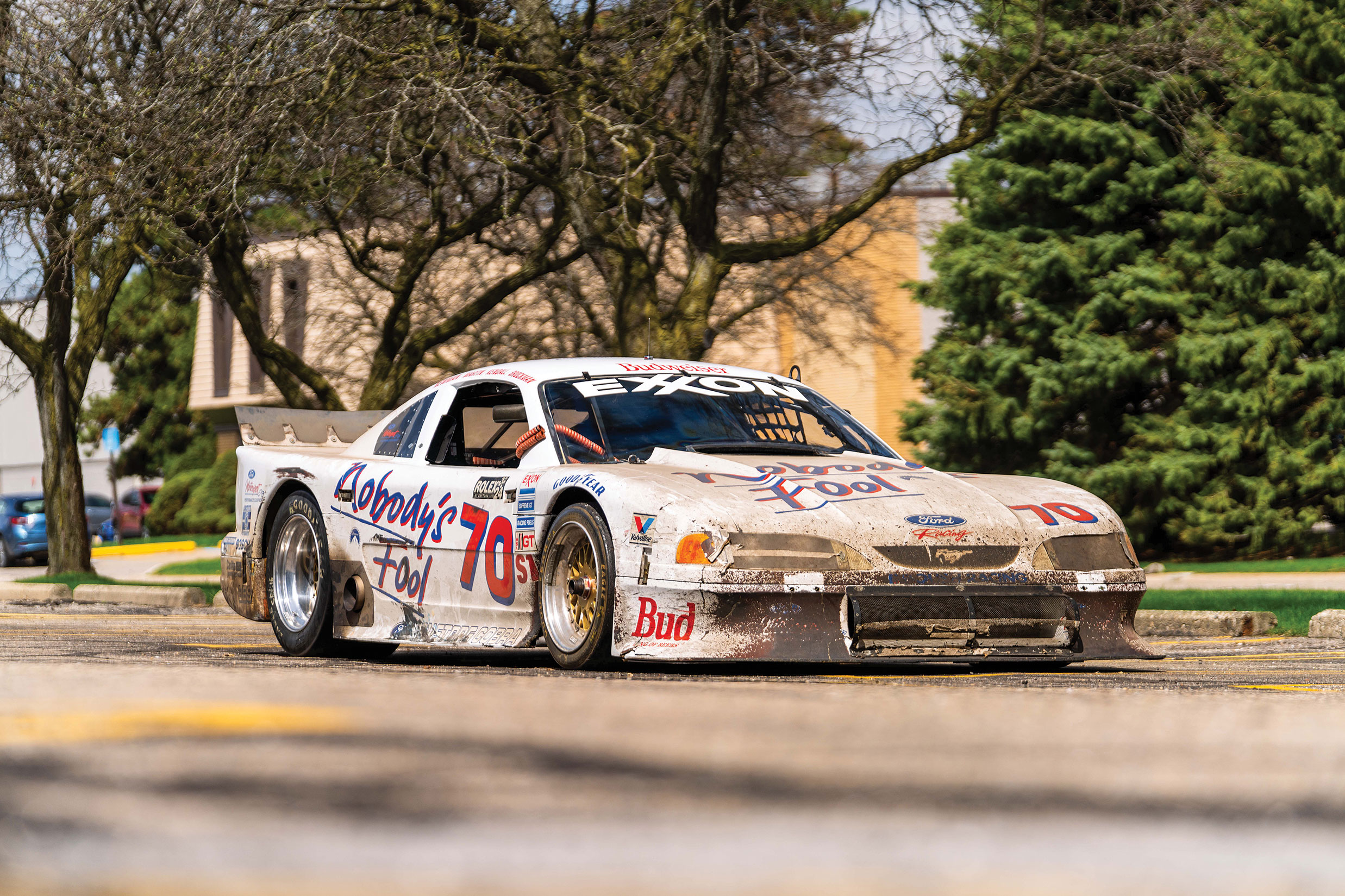
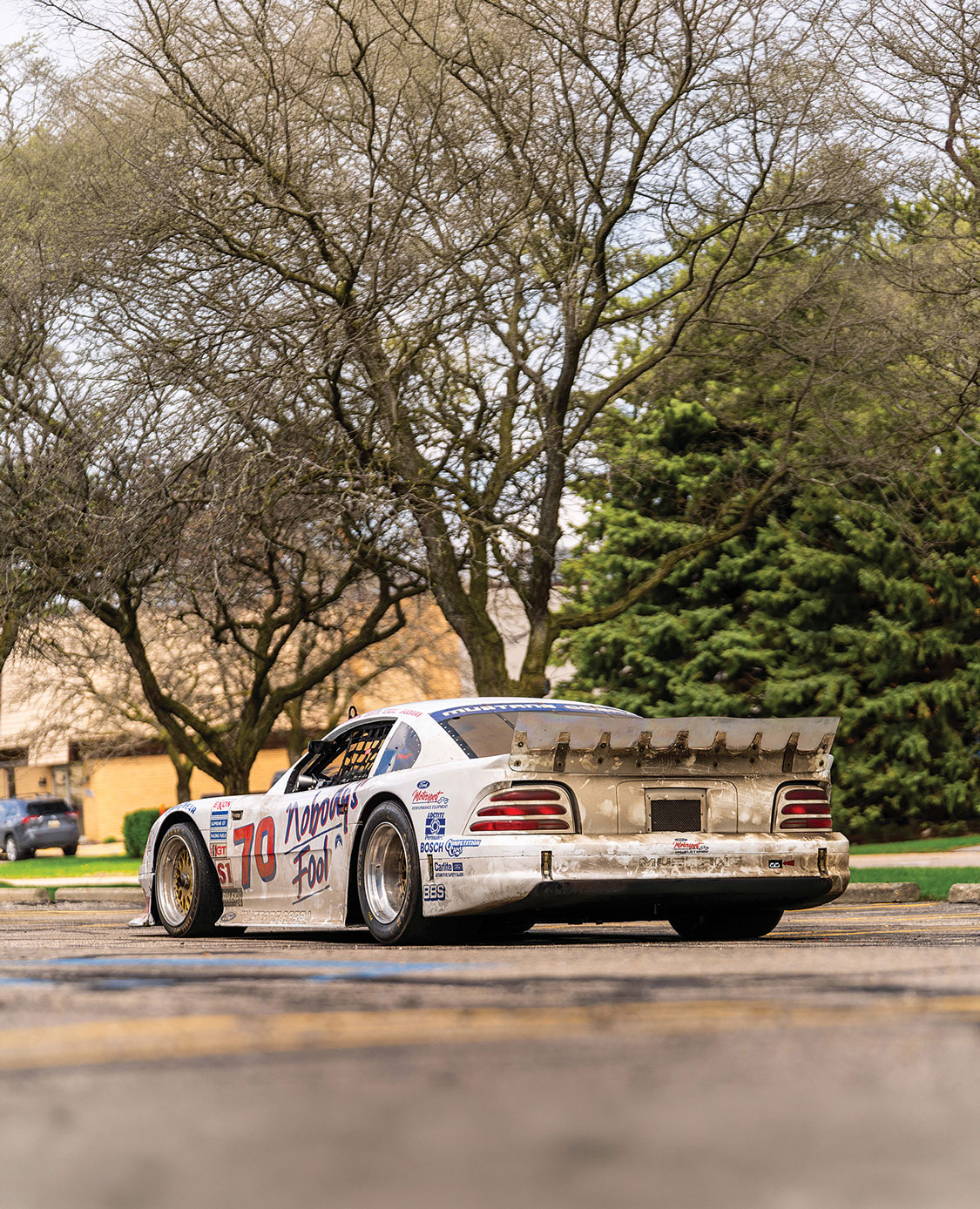
This car, Lot S140, sold for $935,000, including buyer’s premium, at Mecum Auctions’ Nashville, TN, sale, on September 26, 2026.
Paul Newman the actor needs no introduction. And with countless dedicated articles in all manner of periodicals, nor do his “side gigs” as a race-car driver and race-team owner. However, I suspect many people fail to note just how good a driver he really was, or the scope of his success as a team owner, which is perhaps even more impressive. He was a serious racer and humble regarding his accomplishments, which has forever endeared him to the racing fraternity.
No racing fool
It’s well documented that Newman succumbed to the racing bug while training for his starring role in the 1969 movie “Winning.” In preparation for this role, he became one of the very first students at Bob Bondurant’s highly respected and long-running racing school, from which he received a “Superior” rating, a portent of things to come.
Early on, Newman was fortunate to have Bob Sharp, a local Datsun (Nissan) dealer, who also happened to be a six-time SCCA National Champion, just a short drive from his Connecticut home. Sharp was a mentor to the budding racer, who eventually became a regular driver for his factory-backed team, with whom Newman won multiple national events and three (of his four) SCCA national titles.
Graduating to more-powerful cars, Newman captured a handful of Trans-Am pole positions and victories for Sharp/Datsun, as well as being the fastest qualifier at an IMSA GTX race full of professionally driven Porsche 935s. And speaking of those brutal and unforgiving German weapons, in perhaps his greatest moment as a race driver, Newman co-drove a 935 with Dick Barbour and the great Rolf Stommelen to come home 2nd overall at a rain-drenched Le Mans 24 Hours in 1979.
According to Tommy Kendall, nine-time IMSA and Trans-Am champion, and one of Newman’s co-drivers in our subject car’s Daytona victory, “He started as a ‘gentleman’ driver, but grew into a real professional. He probably could have gotten paid to race.” Kendall went on to say, “Having started at 47 and taking his biggest victory at 70, who else has done that?” Make no mistake, the guy could drive.
Newman’s proficiency shouldn’t overshadow the team that built our subject car. In a little over a decade, Roush Racing produced 33 cars for IMSA and Trans-Am racing that won everything in sight, including those 10 Daytona 24 Hour class victories and multiple championships. The current iteration of the team enjoys continued success in the NASCAR Cup series as RFK Racing, and for many of the years between was led by another of Newman’s co-drivers in the “Nobody’s Fool” Mustang, Cup star Mark Martin.
Provenance sets the price
In building a case to support the near-seven-figure sale of a car with an old-school, steel-tube spaceframe, a normally aspirated, front-mounted, production-based, pushrod V8 engine, and a lightweight, stock-adjacent silhouette body, the analysis of our subject car’s sale can start with a race car it has a lot in common with: a contemporary NASCAR Cup racer.
While older, garden-variety Cup cars are inexpensive — there are always a lot of them for sale — special examples can sell for serious money. For example, Jeff Gordon’s last Dupont Paint “Rainbow” car sold for $213k in 2021 (SCM# 6944168). In that same territory, upper-tier IMSA production racers from the 1980s and ’90s can sell between $100k–$250k (SCM# 6952578, SCM# 241813). In fact, a well-restored, modestly successful 1985 Pontiac Firebird that ran in IMSA’s GTO class — Grand Touring Over (3.0 L) — and was driven by Elliott Forbes-Robinson is listed for sale at $145k, as I write.
Successful, more technically advanced IMSA coupes — some older than our subject car, ironically — or those with excellent history from a factory-backed team such as Roush can trade for well over $500k. Bring a Trailer sold a Trevor Harris-designed 1989 Nissan 300ZX for $550k including premium in May 2021, as well as a two-time Le Mans entrant Pratt & Miller Corvette C7.R with wins at Daytona and Sebring for $850k in March of that year.
Two final data points to finish framing the high end of this market are sister cars to “Nobody’s Fool”: Roush chassis 32 and 33. The first, per Roush Racing’s Ken Fackender, was Tommy Kendall’s 1995 Trans-Am championship car (painted a different livery), sold in 2018 for $720k. The other, chassis 33, happened to be Mecum’s next car on offer (Lot S141) after our subject car. Having carried Kendall to the 1997 Trans-Am championship (his third straight and fourth overall) and winning the first 11 of 13 races that season (still the longest winning streak in professional road racing), it sold for $825k.
Star power
Purely as a race car, arguably, the ex-Kendall Chassis 33 was far more successful than our subject car but sold for $110k less. Kendall, who was present at the auction, currently owns some of his championship racers, and has an impressive command of the larger collector car market. He was certain “Nobody’s Fool” would sell for more, given the Newman factor.
As we’ve seen many times across these pages, cars with good provenance can carry a premium — sometimes small, and sometimes large, as with our subject car. Here, the reasoning is sound: victory at a hugely important race, a Hall-of-Fame builder and rock-star drivers, one of whom happened to also be a global Hollywood icon. Newman was also an inveterate and generous philanthropist and all-around nice guy (he once bought my stepmother a bottle of birthday champagne at Elkhart Lake’s Siebkens Resort), so it’s pretty easy to draw a trend line through the data to this market-appropriate result.