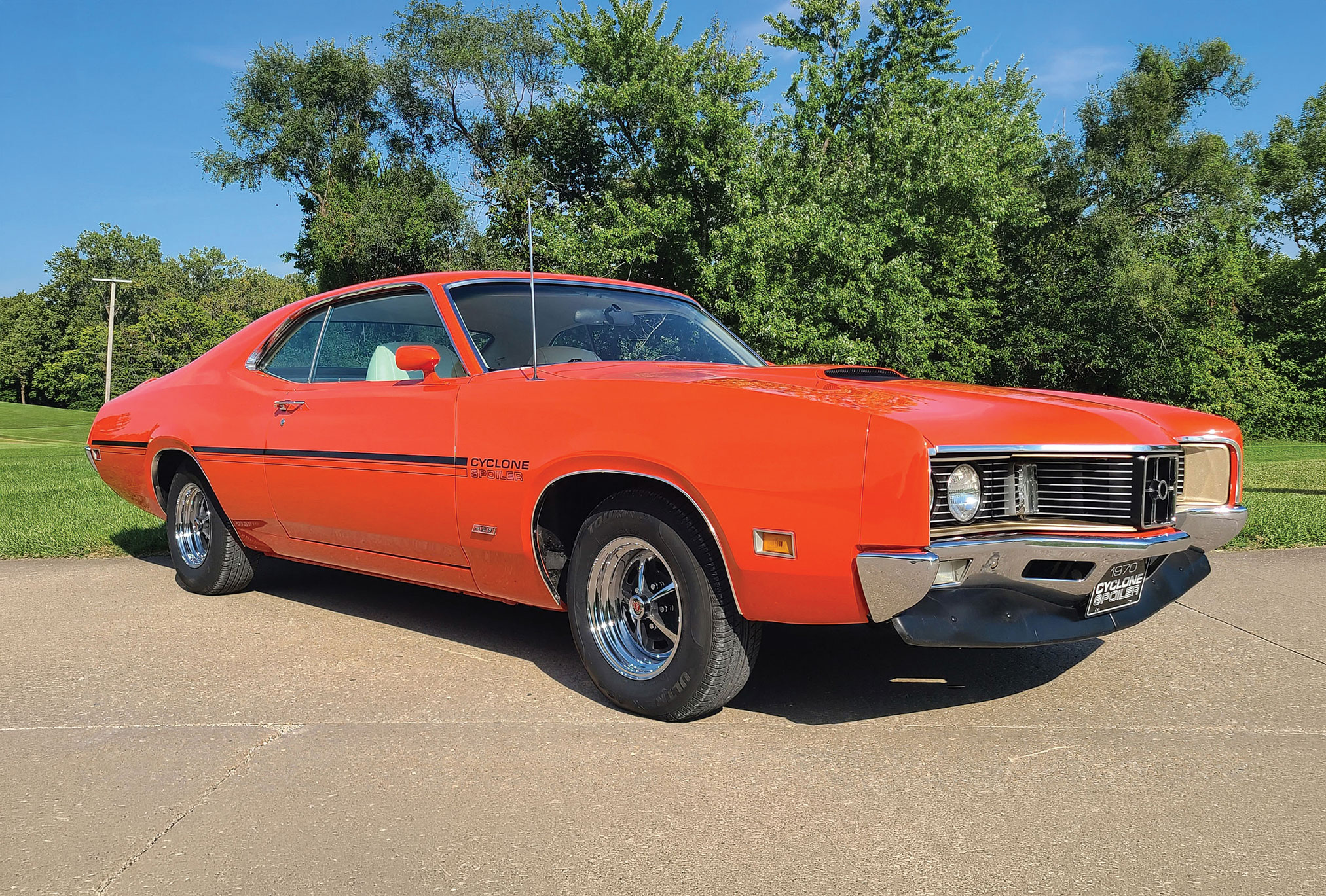
This car, Lot 420, sold for $66,000, including buyer’s premium, at Barrett-Jackson’s Las Vegas, NV, auction on September 11, 2026.
The high-water mark of the muscle-car era came in 1970. Nearly every builder, regardless of its traditional market, offered sporty coupes. While Chevrolet, Ford and Plymouth had their usual offerings, unexpected players began catering to performance buyers.
Oldsmobile created Doctor Oldsmobile to pitch 442s, while staid Buick invoked a recent hit by the Doors promising Gran Sports would “light your fire.” (It’s unknown whether the shock — or shame — of the appropriation of his biggest hit would lead to Jim Morrison’s untimely death a year later.) Even American Motors offered its Rebel Machine, assuring buyers in ads it would outrun “… your old man’s Cadilliac.”
Meanwhile, Mercury was selling the Montego, an upscale version of the newly introduced Ford Torino. For performance models, it reused the Cyclone moniker, which dated to the mid-’60s V8-powered versions of its Falcon-based Comets. The recent NASCAR success of Fairlane-based Cyclones made it the logical name for the new generation.
Close cousins
Though the Montego/Cyclone shared the same 117-inch wheelbase and basic body with their Ford cousins, the Mercury featured a dramatic “M”-shaped fascia. Cyclones went one better with an aggressive gun-sight grille and were offered only as a 2-door hard top.
Here’s where the Cyclone gets interesting: The lowest-priced model was a no-frills sleeper available only with the 429-ci mill in 360-hp tune. Its $3,238 base price was about $250 more than the Plymouth Road Runner coupe, the usual “bang for the buck” model of the segment. However, upgrading the Plymouth from the standard 335-hp 383-ci V8 to the 390-hp 440 put the cars in a virtual tie on price. Apparently, few buyers thought to cross-shop at Mercury, because just 1,700 were sold.
The upscale Cyclone GT was $12 cheaper than the base Cyclone but came standard with the 250-hp 351-ci V8. It led Cyclone production with 10,171 produced. In comparison, the equivalent Torino GT was $120 cheaper and sold 57,000 examples.
Spoiler alert
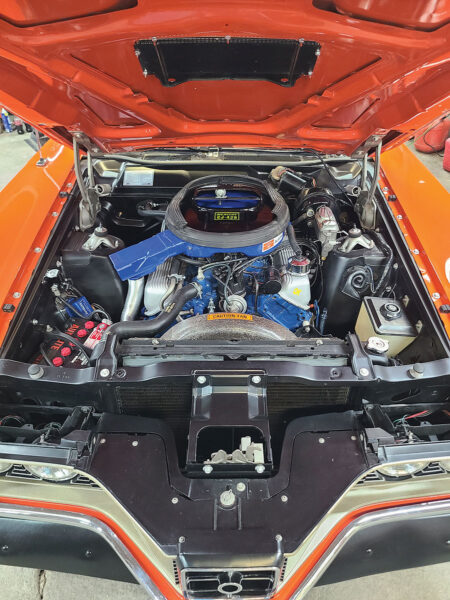
The third Cyclone, our subject car, was the Spoiler, which came standard with a Ram Air 429 Cobra Jet producing 370 hp. The 375-hp Super Cobra Jet — featuring forged pistons, a four-bolt main block and solid-lifter camshaft — was optional. (Although it was listed in sales brochures, no Cyclones with the Boss 429-spec NASCAR “Semi Hemi” were produced.)
As the top model, the Spoiler came with the usual performance features of the time: 4-speed gearbox with Hurst shifter (automatic optional), locking differential, handling package, upgraded instruments, bucket seats, racing mirrors and available “Competition Colors.” And of course, the namesake front “anti-lift” and rear deck “airfoil” spoilers, all for just $3,759.
It was a credible performer, capable of sub-6-second 0–60 mph sprints and quarter-mile times in the 13–14-second range. Despite its mix of power and prestige, just 1,631 Cyclone Spoilers found buyers in 1970, compared with 7,700 Torino Cobras.
Fair example, fair price
Our subject car received a thorough restoration in the recent past, though the year of completion was unspecified. The paint looked well applied, and the bumpers and trim looked recent; however, the fit of the trim on the hood’s leading edge looked a bit off. The body was straight, though trunk-lid gaps looked variable in photos. The interior was fresh and well installed, with a professionally restored dashboard. The engine bay was clean and correct with factory stickers but no assembly marks, and a period-looking OEM battery was installed. The undercarriage was also clean but wasn’t to factory-fresh standard. The fuel tank and springs appeared to be in hammered silver finish, with the underside of the body in red primer. Exhaust pipes were heat wrapped and terminated in aftermarket chrome tips. In the photos, generic modern tires looked aged, while an ancient Uniroyal Tiger Paw sat in the immaculate trunk. In short, a nice restoration, but not particularly noteworthy.
The SCM Pocket Price Guide values a Spoiler at a range of $55k–$80k, squarely in line with other sources. So this average car sold for average money. Outliers aside, despite their potency and rarity, Cyclones remain affordable. With so few produced, it’s not surprising there are just a handful of Cyclone sales in the SCM Platinum Auction Database. Most were in the $50k to mid-$60k range, the high sale being a condition #1- 1971 example that sold for $104,500 at Mecum Kissimmee in 2020 (SCM# 6922037). The highest sale I found was for a low-mile, unrestored Super Cobra Jet example, which brought $180,400 at Barrett-Jackson’s Fall Scottsdale sale in 2025. Midsize muscle cars have a strong following; the Cyclone and offerings from other upscale makes give buyers an alternative to the usual Chevy-Ford-Plymouth fare at good value for money.