Is this growing crop of “used cars” on its way to become legitimate collectibles?
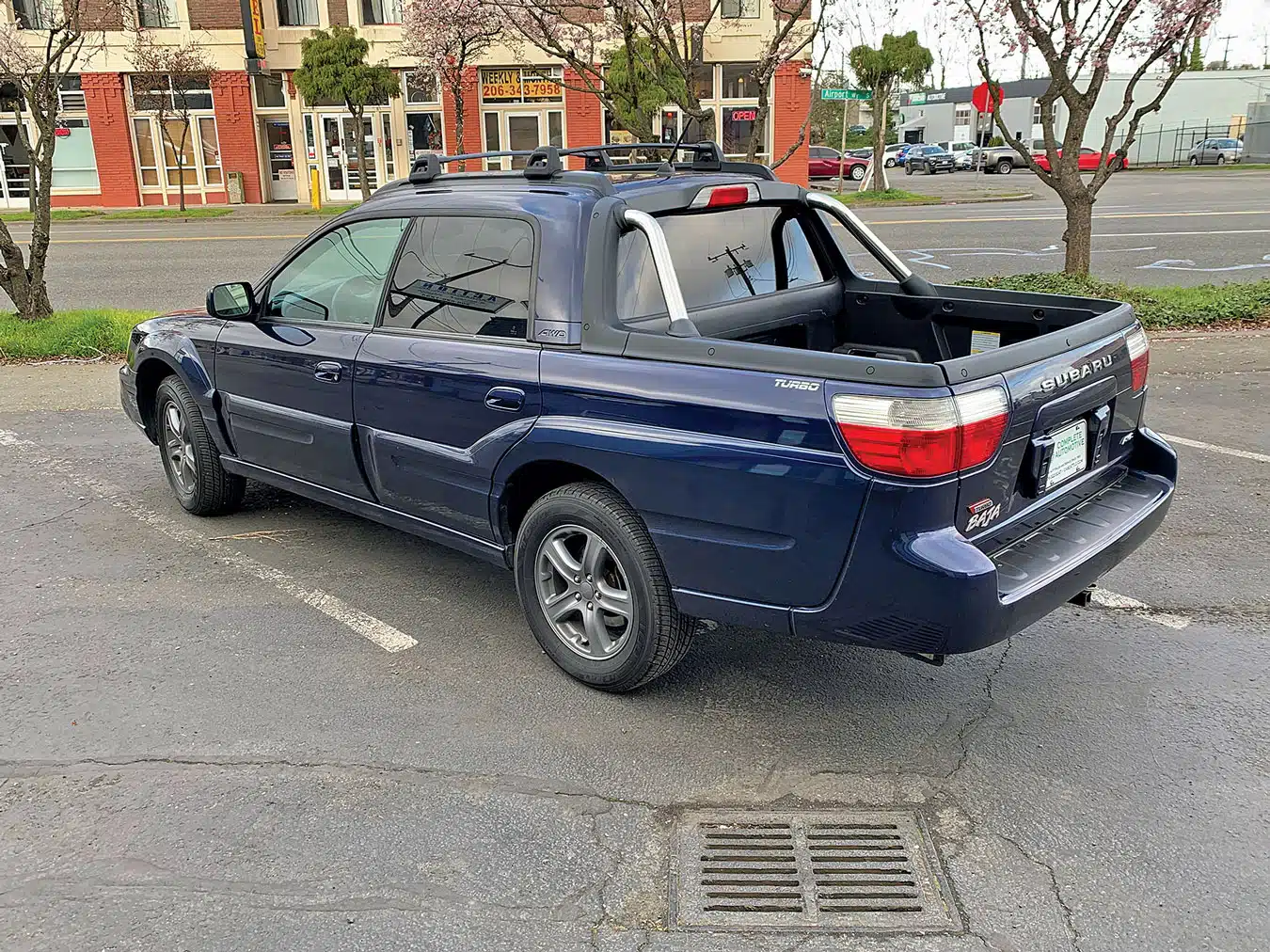
A couple years ago, I came across a low-mile 2005 Subaru Baja Turbo for sale. I wasn’t in the market for one of these mini-pickups, but the car was advertised as one-owner and equipped with a manual. I was curious. I’d previously read that the turbo model was quick (it has a WRX motor), somewhat rare and hard to find with a 5-speed. So I bought it. I paid $30k, which was about $5k more than the Baja cost when new.
After a couple years of trouble-free ownership, I decided to move on. I needed a bit more room for ski gear and more towing power, so this had me looking at the perennially popular mid-sized Toyota Tacoma. Possessing some of the Subaru’s best traits (reliable and rugged, and with four-wheel drive) these trucks are obviously far more common than my Subaru and not as sporty. My ideal Tacoma was one of the truly compact, pre-2005 first-generation examples with a manual and a V6. Search on.
Find another
What I found was unexpected. The first thing I noticed in looking at online-auction sales was the large volume of Tacomas that were selling. More interesting were the prices. In 2005, a new Tacoma cost anywhere from $15k to $24k, depending on trim level. I saw dozens of used Tacomas from that era that had sold well over their original sticker price. One very nice low-mile example went for $45k. In all, I counted more than 50 recent sales at or above $25k, which was the price of the highest trim when new.
So here were two outlier examples of modern “used cars” that turn the whole depreciation thing upside down. Crazy, right?
But hold on. I did some more searching and immediately saw that the funky, cute Honda Element, sold between the 2003–11 model years, is trending in the same direction. Priced between $16k to $21k when new, this boxy, CR-V-based utility vehicle is a hit on Bring a Trailer — maybe even […]
2005 Subaru Baja Turbo
Is this growing crop of “used cars” on its way to become legitimate collectibles?
A couple years ago, I came across a low-mile 2005 Subaru Baja Turbo for sale. I wasn’t in the market for one of these mini-pickups, but the car was advertised as one-owner and equipped with a manual. I was curious. I’d previously read that the turbo model was quick (it has a WRX motor), somewhat rare and hard to find with a 5-speed. So I bought it. I paid $30k, which was about $5k more than the Baja cost when new.
After a couple years of trouble-free ownership, I decided to move on. I needed a bit more room for ski gear and more towing power, so this had me looking at the perennially popular mid-sized Toyota Tacoma. Possessing some of the Subaru’s best traits (reliable and rugged, and with four-wheel drive) these trucks are obviously far more common than my Subaru and not as sporty. My ideal Tacoma was one of the truly compact, pre-2005 first-generation examples with a manual and a V6. Search on.
Find another
What I found was unexpected. The first thing I noticed in looking at online-auction sales was the large volume of Tacomas that were selling. More interesting were the prices. In 2005, a new Tacoma cost anywhere from $15k to $24k, depending on trim level. I saw dozens of used Tacomas from that era that had sold well over their original sticker price. One very nice low-mile example went for $45k. In all, I counted more than 50 recent sales at or above $25k, which was the price of the highest trim when new.
So here were two outlier examples of modern “used cars” that turn the whole depreciation thing upside down. Crazy, right?
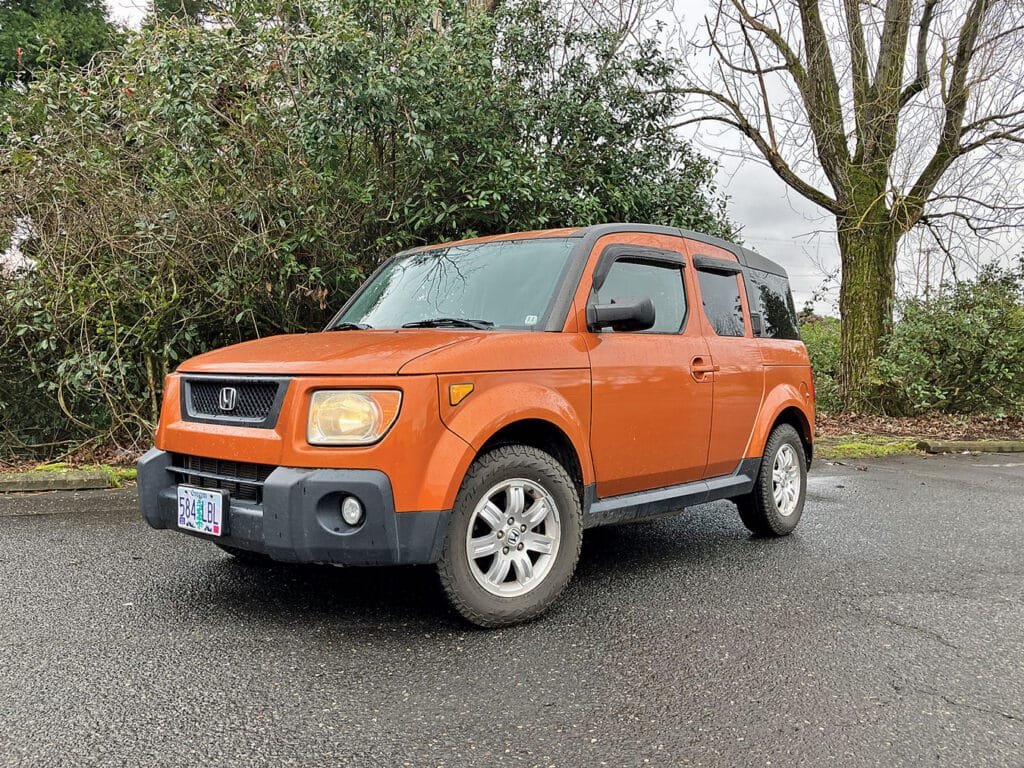
But hold on. I did some more searching and immediately saw that the funky, cute Honda Element, sold between the 2003–11 model years, is trending in the same direction. Priced between $16k to $21k when new, this boxy, CR-V-based utility vehicle is a hit on Bring a Trailer — maybe even a home run. With 14 examples that have recently sold at prices over $25k, and another 26 above the $20k threshold, that’s 40 of these trucklets bringing MSRP-plus.
2006 Honda Element
Value in use
If you’re thinking all these online auction stars are all ultra-low-mileage garage queens, you’d be wrong. Many of the sales I looked at were mid-mileage examples with 30k–50k on the clock. Yes, they were all well preserved and in great shape, but these are clearly examples that have been used and well cared for, not cars that were preserved in amber.
What gives? I think a trend seems to be emerging here. Buyers are looking for reliable, well-sorted vehicles from a simpler era. Add to that manual transmissions, interesting designs and good bones, and you have a winner.
“Many buyers seem to be drawn to unique models when it comes to design,” says Adam Cramer, founder of Avants, a non-marque-specific car club with four locations in the western U.S. “Add to that manual transmissions and old-school ‘analog’ simplicity, and you have a car that holds its value over time.”
Cars from the early 2000s to the mid-teens may not seem “analog” in the way that we think of carbureted, computerless models from an earlier era. But they’re certainly analog-adjacent, largely without screens, electronic driving aids and cloud connectivity, those hallmarks of today’s new-car market. Cars from this era qualify as modern in that they have features such as airbags and fuel injection, yet retain simple and well-proven systems such as hydraulic steering, conventional suspensions and good old-fashioned mechanical keys. By contrast, even inexpensive new cars sold today carry dozens of electronic modules communicating over a sophisticated computer network.
All this comes at a price, with the average transaction price for a new vehicle now within a few bucks of $50k. If you’re in the market and looking for something more interesting to own and fun to drive than, say, a new 2025 CR-V, all of a sudden a well-preserved used Element starts looking like good value. Yes, even at the same or more than it cost new.
Buy now?
We know that many sports cars have followed a similar path. SCMers have witnessed — and likely expected — rising values in models such as Porsche 911s from the 964 and 993 eras (especially those with RS or GT3 badges). But Elements and Bajas? “The trend will continue, particularly for good examples,” says Doug DeMuro of Cars & Bids. “It’s not easy to find a nice Element or Baja anymore.”
Numbers don’t lie. The demand for such vehicles that’s generating strong prices in the used market right now is one thing, however, and long-term collectibility might be another. My guess is that buyers like me just prefer cars that are simpler and less laden with driver nannies and digital wizardry. (And good luck finding any new car with three pedals.) If true and these cars are being bought for utilitarian purposes today, that is still encouraging to the idea that the best, preserved examples might become quite valuable in the decades to come.
With an SCM subscription, you’ll have the information, tools, and advice you need from 50+ world-renowned authorities on collector cars to make the best decisions for buying, selling and collecting classic and sports cars.
18 printed issues per year: 12 monthly magazines + 6 special guides
150+ printed pages every month that help you be a smarter collector


Leave a Reply