
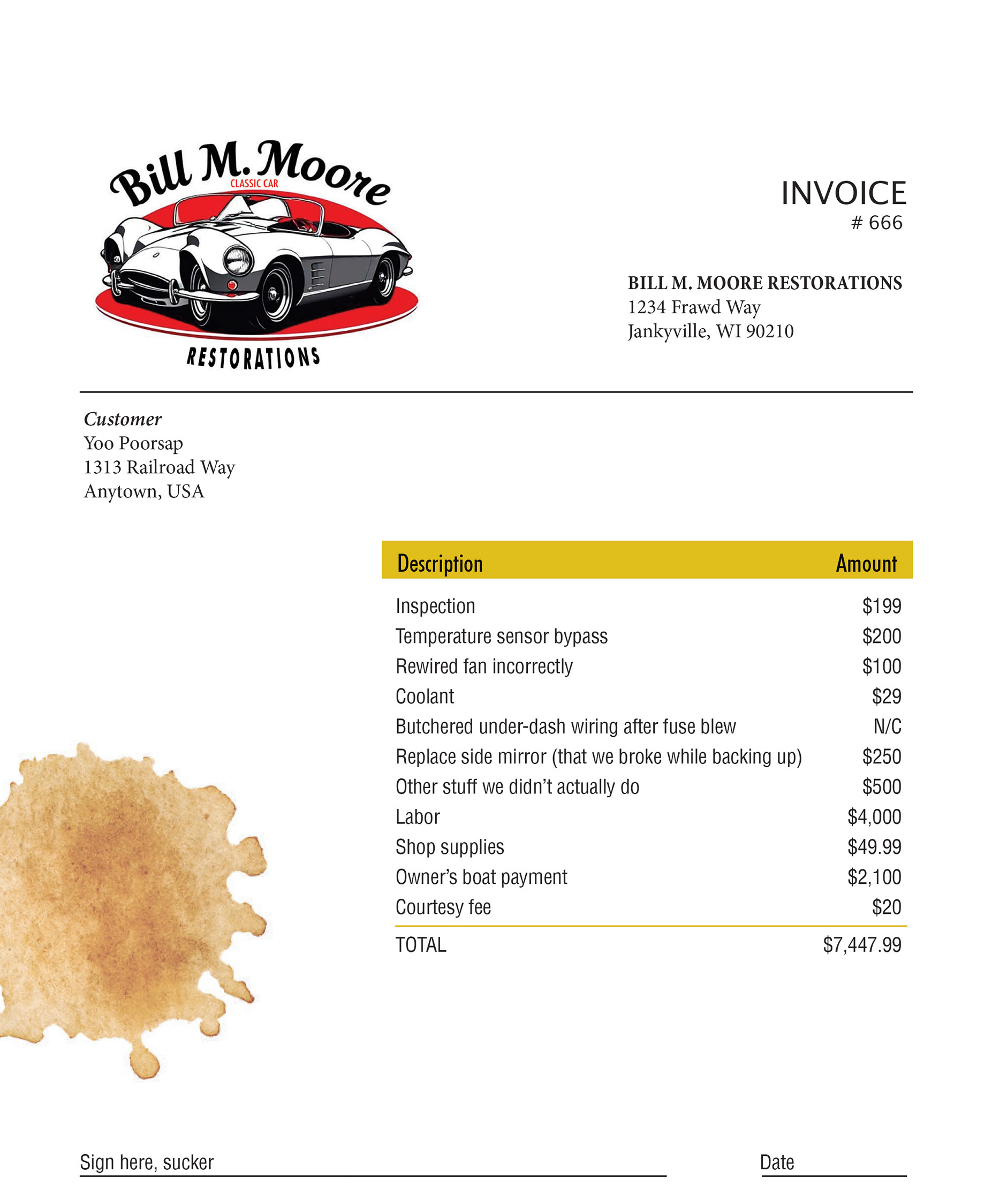

I recently took a drive with a friend who works as a mechanic at a high-end shop in Southern California. He told me a cautionary tale about a customer who bought an older Ferrari with a sheaf of maintenance receipts, including a recent major service at another specialist in the area. The customer brought the car in because it would slowly overheat while driving, regardless of conditions. The problem had been masked by wiring the engine fan to run all the time instead of cycling on and off as-needed, as it would from the factory. My friend’s investigation into the problem eventually […]
I recently took a drive with a friend who works as a mechanic at a high-end shop in Southern California. He told me a cautionary tale about a customer who bought an older Ferrari with a sheaf of maintenance receipts, including a recent major service at another specialist in the area.
The customer brought the car in because it would slowly overheat while driving, regardless of conditions. The problem had been masked by wiring the engine fan to run all the time instead of cycling on and off as-needed, as it would from the factory. My friend’s investigation into the problem eventually led to an expensive engine overhaul; the engine’s cooling passages had been blocked with sediment. At the same time, my friend noted that several items specified in a major service for this model had not, in fact, been performed. The net result was a big bill for the customer and an object lesson for the rest of us.
Get a second opinion
The wisdom to take away from this incident is that receipts for work performed do not guarantee that the work was performed with quality and attention to detail, even if a previous owner has high-dollar invoices. In this case, the work performed was not only incomplete but actually made the car worse in an effort to address (or cover up) a deeper problem.
What collectors can do to avoid a situation like this is generally well known but often not followed, either in the interests of expediency or perhaps a desire to not offend the seller. Of course, your homework starts with a pre-purchase inspection performed by a different shop than the one that’s been servicing the car. You absolutely need a fresh set of eyes and an independent assessment to understand what you need to know about a new-to-you vehicle.
In fact, especially for valuable cars with expensive service requirements, it wouldn’t hurt to get two separate inspections and then compare the results. You will probably learn which shop you’ll prefer to use for future work. At worst, you’ll spend a tiny fraction of the purchase price on another inspection, confirm the first shop’s findings, and then close the deal with greater peace of mind. One tactic to consider is to have one inspection performed at the official marque dealership and another at a well-regarded independent shop.
Dig deeper
When presented with a stack of receipts, most buyers put the papers in a folder and look through them only if something turns out to be wrong. Instead, read them carefully to understand the repair history of the subject car and to get a sense of the shops used by prior owners.
It’s never a bad idea to call the shops that performed the work and ask detailed questions about what was serviced on the car and if there were any other issues that weren’t addressed. A reputable shop serving high-end vehicles should not hesitate to offer information. If a system in the car has been altered from stock, ask if that shop did the work and if so, why they chose to perform a non-standard repair. There may be a good explanation, or not. Dealerships may be less forthcoming with details, but any independent shop should be eager to maintain its reputation as well as attract your business.
Speaking of reputation, another step you can take is to ask around in the seller’s area and get some individual reviews of the shop in question. Marque clubs are indispensable for this because club members will have used every shop in the region and will likely have strong opinions about who’s best and whom to avoid. The key is, you have to ask people, because simply relying on online reviews is next to useless. You need to evaluate the reviewer as well as the review.
Adapt at auctions
Finally, if the vehicle is being sold at auction, it’s important to acknowledge you won’t necessarily have time or access to have a pre-purchase inspection done. Depending on the auction, you might have hours rather than days for due diligence. With an online auction, you may be a significant distance from where the car is located. However, get your phone, tablet or laptop computer out and do as much as you can in the allotted time. At a minimum, ask the seller or the auction company which shops have been caring for the vehicle, and call those shops for some background on the car. If it’s a newer car with a CARFAX report, the shops making entries in the car’s service history will be identified. Any amount of knowledge you gain will be more than you had previously.
With some skepticism and diligence, you can greatly increase your chances of discovering potentially expensive issues before you commit to purchase a collector car. Alternately, the knowledge you gain may substantially enhance your bargaining position before the purchase. Either way, there’s really no downside to doing this kind of pre-purchase homework.
One response to “Sleuthing the Paper Trail”
Keep on enjoying it passion, you’re fortunate to have such access